

KATHMANDU, April 5, 2026 — Trading in the Nepali bullion market opened with a sense of calm this Sunday, as prices for both gold and silver remained unchanged from the rates established late last week. Market observers noted that the domestic market is currently mirroring a period of relative consolidation in international metal prices.
Current Market Rates
According to the Nepal Gold and Silver Dealers’ Federation, the price of fine gold (hallmark) is being traded at Rs 294,000 per tola. This price has held firm since Thursday, marking a period of stability following a volatile start to the month which saw prices fluctuate by several thousand rupees.
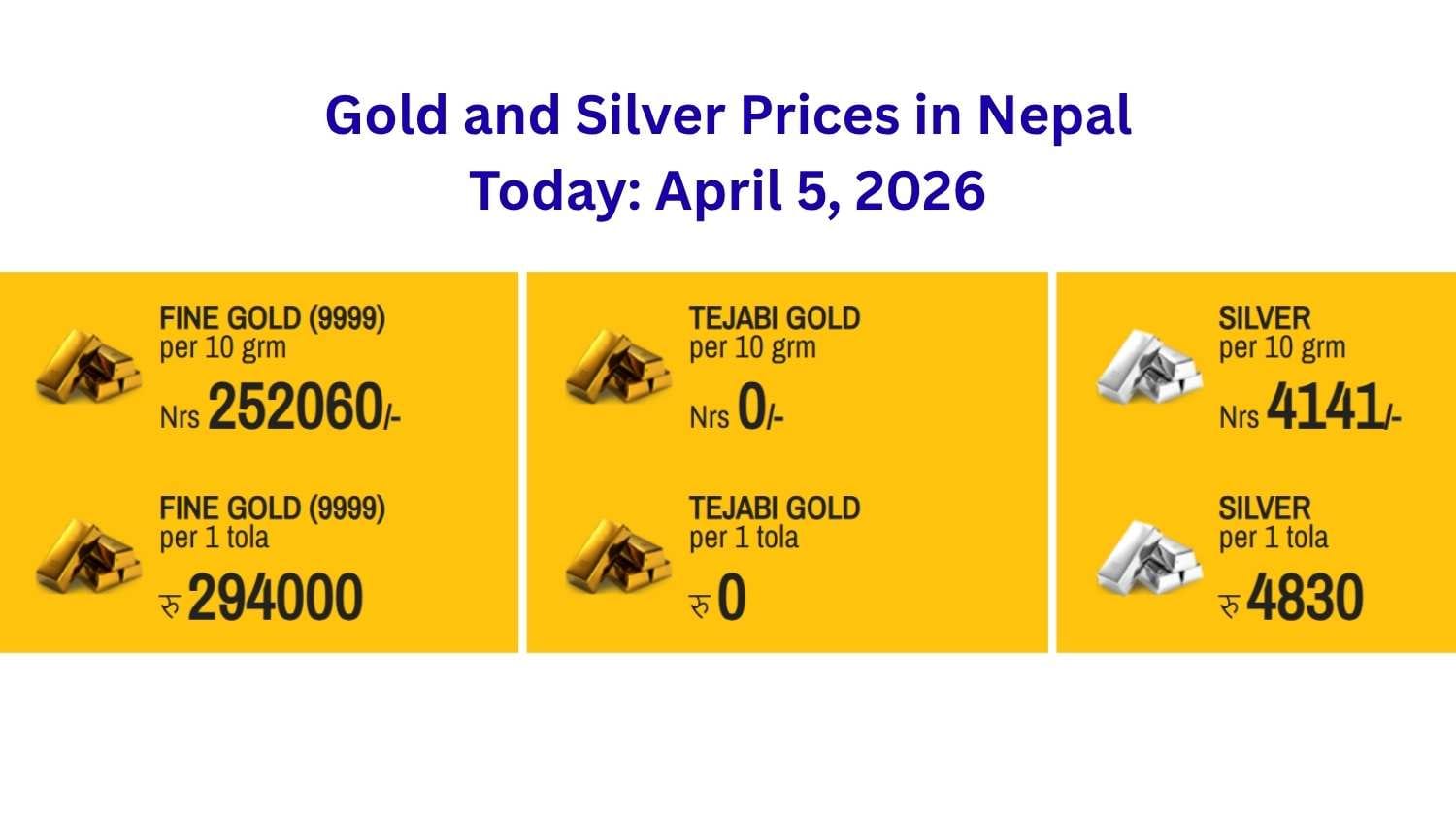
Similarly, the silver market showed no movement today. The white metal is being exchanged at Rs 4,830 per tola, maintaining the valuation set during Friday’s closing session.
Read: gold and silver price in Nepal
| Metal Type | Price per Tola (NPR) | Status |
| Fine Gold | Rs 294,000 | Stable |
| Tejabi Gold | Rs 292,600 | Stable |
| Silver | Rs 4,830 | Stable |
Factors Behind the Stability
The current price plateau in Nepal is a direct reflection of the international market, where gold has been hovering near the $4,700 per ounce mark. Local experts point to several global factors currently balancing the scales:
- Geopolitical Resilience: While ongoing tensions in the Middle East and Eastern Europe continue to provide a “safe-haven” floor for prices, a lack of new escalations over the weekend prevented a further surge.
- Currency Fluctuations: The Nepali Rupee has remained relatively steady against the US Dollar (approximately Rs 147.50), preventing additional “exchange-rate inflation” that often pushes local gold prices higher even when global markets are flat.
- Central Bank Activity: Continued gold accumulation by central banks—notably in China and India—is providing long-term support, though immediate retail demand in Nepal has cooled slightly due to the high price point.
Future Expectations: What Lies Ahead?
Looking forward, market analysts and federation members suggest that the era of “cheap gold” is firmly in the past, with several indicators pointing toward a bullish (rising) trend for the remainder of 2026.
1. The “Silver Surge”
Interestingly, many commodity experts believe silver may outperform gold in percentage terms this year. With the rapid expansion of AI infrastructure, electric vehicles (EVs), and solar energy—all of which require significant amounts of silver—industrial demand is expected to create a supply deficit. Some analysts predict silver could test the Rs 5,500–6,000 per tola range if global industrial demand continues to outpace mining output.
2. Gold to Break New Records?
For gold, the psychological barrier of Rs 300,000 per tola is the next major milestone.
“If the US Federal Reserve proceeds with further interest rate cuts in the coming quarters, we could see gold prices climb toward Rs 325,000 by the end of the year,” says a senior member of the Federation. “Lower interest rates make non-yielding assets like gold more attractive to global investors.”
3. Impact on Local Consumers
For the average Nepali consumer, these high prices are changing traditional buying habits. With the wedding season approaching, many are opting for “lightweight” jewelry or exchanging old gold for new designs rather than making fresh purchases.
Investors’ Tip: While the long-term outlook remains strong, experts advise caution. With prices at near-historic highs, a short-term market correction of 7–10% is possible if geopolitical tensions ease, which could provide a better entry point for those looking to buy.
