If you are searching for the NEPSE Margin Trading Guide, this post is for you. Recently, Nepse allowed brokers to offer margin trading. Margin trading is often described as a “power-up” for seasoned investors.
It allows you to trade more than your current capital would typically permit, effectively using leverage to amplify your market presence. However, in the context of the Nepal Stock Exchange (NEPSE), this facility comes with strict regulatory guardrails and significant risks that every investor must understand.
Eligibility and Limits for Margin Trading
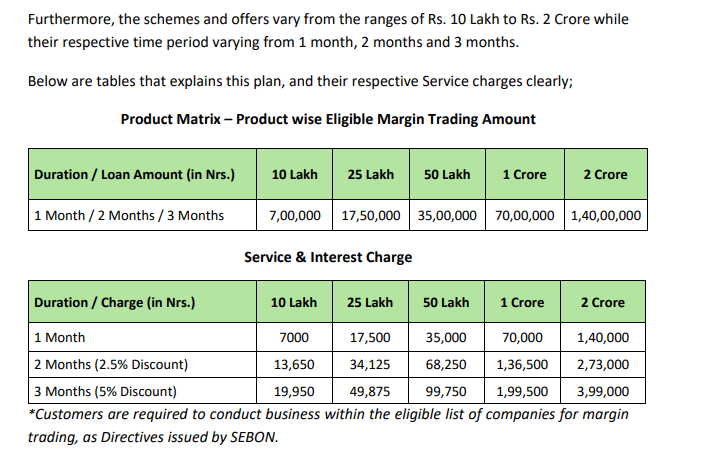
Not every company on the board is a candidate for margin trading. According to current guidelines, only companies that have been listed on NEPSE for at least two years following their initial public offering (IPO) are eligible. This ensures that the stocks being leveraged have a proven track record of liquidity and price discovery.
From the broker’s perspective, there are also firm boundaries:
- Broker Capacity: A stockbroker can provide margin facilities up to five times their certified net worth.
- Borrowing Caps: Any loans the broker takes from financial institutions to fund these facilities cannot exceed 4.5 times their net worth.
- Concentration Risk: To prevent over-exposure, a broker cannot lend more than 10% of their total margin capacity to a single customer and to that customer’s immediate family or affiliates.
- Duration: Typically, these facilities are granted for one year, though they can be renewed if the investor wishes to continue.
Maintenance Margins and Power of Attorney
Margin trading isn’t a “set it and forget it” strategy. It requires constant vigilance.
When you enter a margin agreement, you provide a pre-approval letter and a Power of Attorney (PoA) to your broker. This isn’t just paperwork; it’s a legal safety trigger. If the market dips and you fail to maintain the maintenance margin (the minimum equity you must hold in the account), or if you fail to repay the loan on time:
- The broker has the right to initiate a margin call.
- If the call isn’t met, the PoA allows the broker to sell your shares directly from your beneficiary account to clear the debt.
Opportunities vs. Risks: The Great Balance

Margin trading is a classic “high-risk, high-reward” scenario. Whether it builds your wealth or drains it depends entirely on market conditions and your exit strategy.
The Opportunities
- Capital Amplification: If you have high-conviction information and the market is trending upward while interest rates are falling, margin trading allows you to maximize your gains beyond your cash-on-hand.
- Wealth Creation: For experienced investors with limited liquidity but strong market insight, it serves as a bridge to larger portfolio growth.
The Risks
- The “Sponge” Effect: Just as leverage multiplies gains, it multiplies losses. In a bearish market with rising interest rates, your principal can vanish rapidly.
- Mental Pressure: Receiving a margin call during a market crash is one of the most stressful experiences an investor can face.
- Forced Liquidation: If you cannot manage the maintenance margin, the broker may sell your shares at the bottom of the market to protect their loan, locking in your losses and potentially wiping out your initial investment.
Cash vs. Margin
Suppose you have Rs. 300,000 and want to invest in a company whose share price is Rs. 1,000.
| Scenario | Cash Trading (100% Equity) | Margin Trading (30% Initial Margin) |
| Your Capital | Rs. 300,000 | Rs. 300,000 |
| Broker Loan | Rs. 0 | Rs. 700,000 |
| Total Buying Power | Rs. 300,000 | Rs. 1,000,000 |
| Shares Bought | 300 Shares | 1,000 Shares |
| IF PRICE GOES UP 20% | Profit: Rs. 60,000 | Profit: Rs. 200,000 |
| Return on Investment | 20% | ~66% (minus interest) |
| IF PRICE DROPS 20% | Loss: Rs. 60,000 | Loss: Rs. 200,000 |
| Equity Remaining | Rs. 240,000 | Rs. 100,000 (Margin Call Triggered) |
Note: In the Margin scenario, a 20% drop in share price results in a 66% loss of your original capital. This is why maintaining the 20% maintenance margin is critical to avoid forced liquidation.
Final Thoughts: Protect Your Principal
The legendary Warren Buffett has two famous rules: Rule No. 1: Never lose money. Rule No. 2: Never forget rule No. 1. Margin trading can be a golden opportunity for those who have done their homework, but it is a “sponge” that absorbs the capital of the uninformed. For newcomers in the Nepalese market, an extensive study is mandatory.
Don’t let greed push you into an “investment accident.” Only give margin trading a place in your portfolio after a cold, hard analysis of the potential downside.
Frequently Asked Questions: NEPSE Margin Trading
Which companies are eligible for margin trading in NEPSE?
Not all stocks can be bought on margin. To be eligible, a company must:
Have been listed on the Nepal Stock Exchange for at least two years.
Maintain a net worth above its paid-up capital.
(As per recent SEBON directives) Have at least 10,000 shareholders and have distributed a minimum 10% dividend in the last two fiscal years.
How much “Initial Margin” do I need to pay?
According to the latest 2082/2083 guidelines, investors must provide a minimum initial margin of 30% of the market price. This means if you want to buy shares worth Rs. 1,000,000, you must put up Rs. 300,000 of your own capital, and the broker can fund the remaining Rs. 700,000.
What is a “Maintenance Margin” and what happens if it falls?
The maintenance margin is the minimum equity you must maintain in your account (currently set at 20%). If the market value of your shares drops and your equity falls below this 20% threshold, the broker will issue a “Margin Call,” requiring you to deposit more cash or shares immediately.
Yes, if you fail to meet a margin call or fail to renew your facility after one year. By signing the Power of Attorney (PoA) and the pre-approval letter during the account opening, you delegate the right to the broker to sell your shares to recover the loan amount if you default on your obligations.
How long is the margin loan valid for?
The maximum period for a margin trading facility is one year. However, if you have a good track record and wish to continue, the facility can be renewed at the end of the term.
Is there a limit on how much I can borrow?
Yes. A single client (including their family members or affiliated firms) cannot receive more than 10% of the broker’s total margin lending capacity. This prevents a single large investor from over-leveraging with one firm.
Read Also: How to Open a DEMAT Account Online in Nepal (2026 Guide)